
"Indira [Jaisingh] said I'd gone mad," says Grover, recalling his wife and colleague's rebukes in the period between 1993 and 1997 when he was doing up to four HIV-related cases per month pro bono.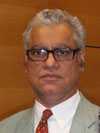
"We were the new Left, we were the people that believed in democracy," he recalls.
Although Jaisingh was last month appointed as one of India's additional solicitor generals, back in those early, more conservative days it was also very much a matter of them versus the establishment. Their first case to fight for the rights of Mumbai's pavement dwellers and hawkers, he says, was "very, very unpopular with the Bombay elite".
HIVs early days
Grover's first HIV case followed in 1988, fighting the incarceration of HIV-positive activist Dominic D'Souza under Goan public health legislation.
Grover lost the case but realised that HIV is as much a legal and human rights issue as a medical and social one.
In 1992, shortly before his death, D'Souza extracted a promise from Grover to continue doing legal work for HIV rights. In an open, posthumous letter to D'Souza, Grover wrote: "Dominic, we shall not fail you and will carry on the work that you started with all the strength at our command."
A long uphill struggle - or "obsession" as Grover styles it - continued until 1997 when the Lawyers Collective procured its largest HIV rights victory to that point in the landmark MX v ZY case. The Bombay High Court ruled against discrimination in public sector employment on the basis of HIV status.
Momentum in the fight against HIV began to accelerate and in 1998 the Lawyers Collective received a grant from the European Commission to continue its work. At its high point the organisation was regularly taking instructions on around 20 HIV-related cases per quarter on a pro bono basis.
In 2001, relates Grover, he then embarked on the long voyage that ultimately resulted in the Supreme Court 'reading down' Section 377 of the Indian Penal Code last month.
Chasing ambulances?
Grover was looking for a body or person to bring a public interest litigation (PIL) in Delhi against Section 377, which prohibited homosexual intercourse and, while rarely enforced, effectively gave police a weapon with which to harass the gay community.
Grover met the sexual health group the Naz Foundation and persuaded them to stand in as petitioner to argue on several constitutional grounds that Section 377 made their job of providing sexual health advice to gay men far more difficult. "I wasn't ambulance chasing," he jokes, "but this is part of public interest work."
Naz Foundation founder and executive director Anjali Gopalan says that it was a fortuitous meeting of minds between them, as her organisation was also looking for a lawyer to help them protect their work from police interference. She speaks in glowing terms of Grover, explaining: "The kind of research that has gone into it and the kind of dedication he's shown has been tremendous."
To deal with the amount of work necessary, Grover created a sizable team at The Lawyers Collective, which he said included Vivek Divan and Aditya Bandhopadyaya, as well as Sharan Parmar, who drafted the petition. Later Julie George helped out and remained active throughout, drafting the main submissions. In the final leg Shivangi Rai, Tripti Tandon and Mehak Sethi joined in and finalised submissions.
They all spent countless hours collecting statutes, case law and domestic and foreign precedents, including an influential South African constitutional case that held that gays and lesbians were entitled to protection under privacy laws. This was something that some in the gay community rejected, as they felt that arguments should be based on rights more fundamental than 'just' privacy.
Secondly, there was criticism that the majority of Grover's arguments were based on HIV and sexual health issues, rather than arguing about (and settling) the more fundamental gay rights question.
Grover says that this objection is irrelevant. "Any lawyer worth his salt will tell you never to give up an argument, more so on ideological grounds," he says. "Grounds in law are like tools. You should use them they way you want to."
Ultimately, Grover successfully gunned for Section 377 under articles 21, 14 and 15 of India's constitution, which respectively protect the right to life and personal liberty, equality before law and prohibit discrimination. The court was highly sympathetic and agreed on all counts in a fascinating and path-breaking judgement.
However, the fight is not quite over yet – the clock for appeals to be lodged with the Supreme Court is still ticking until the end of September.
Nevertheless, Grover says he is optimistic and does not hold much weight in the potential appeals. In fact, he says the appeal of a disciple of yogi Baba Ramdev is a non-story that was mis-reported and was never actually filed. He also scoffs at the appeal by astrologer Manoj Kumar Kaushal.
"I was always confident from the beginning that we will win this case but it will take time," he insists, adding that the HIV Bill, which The Lawyers Collective co-drafted, is also likely to become law within this legislative session.
Life after 377?
So what does The Lawyers Collective's future hold? The organisation, which also deals in women's rights, general health and civil rights, and resistance to tobacco companies and drug patents, has clearly been energised by the charisma and drive of Jaisingh and Grover.
But with Jaisingh now also acting as assistant solicitor general and Grover frequently on the road in his role as a United Nations (UN) Special Rapporteur on Health, is there the risk that the organisation will lose its focus?
Grover doubts it although he does admit there is no set plan for the future or succession. He also adds that recruitment is not easy, in part due to the limited salaries the organisation can offer. All of the The Lawyers Collective work is done pro bono, financed in part through Grover's general private practice work and external funding, which is hard to procure.
"To be very honest," he says, "we are getting very few applications from national law schools - they are all going towards corporate law."
And he has sympathy for their decision. "It's a lonely furrow. You have to work very hard with little money in it. I'm finding a lot of my colleagues are just able to survive and it's a very tough thing. And if you're married and have a kid, you'd rather abandon it."
However, Grover himself is unlikely to bail anytime soon – he says that one of the Lawyers Collective's next big projects will be to look at cleaning up the judicial system, which is a lengthy task if ever there was one.
"For at me at least, I love my work. I think we have made a lot of difference in a lot of people's lives and that's sufficient reward for me," he reflects. "You must respect your own work and that's it."
threads most popular
thread most upvoted
comment newest
first oldest
first
Good job anyway
In a world that still struggles with discrimination and prejudice, it's heartening to see individuals like Anand Grover and organizations like The Lawyers Collective working tirelessly to bring about positive change. Their efforts have undoubtedly paved the way for a more inclusive and accepting society.
As we celebrate this milestone in LGBTQ+ rights, it's important to remember that the fight for equality continues on many fronts. One crucial aspect is finding spaces where LGBTQ+ individuals can be fully embraced and supported. This includes [LGBTQ friendly churches](emersonhouston.org/an-lgbtq-welcoming-congregation/), communities, and even places of worship.
Let's continue to support and celebrate individuals like Anand Grover and work together to create a world where everyone can live their lives authentically and without fear of discrimination.
threads most popular
thread most upvoted
comment newest
first oldest
first