The Bar Council is set to meet with Law Minister Veerappa Moily to address the perceived problem.
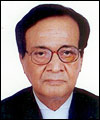
Bar Council chairman Suraj Narain Prasad Sinha (pictured) told Legally India: "We have been witnessing that a large number of law colleges have come up in last few years. They are minting money through these colleges."
He added: "To check on the mushrooming of universities imparting legal education is one of our top priorities.
He explained that within one year, more than 100 law colleges had started up in Rajasthan alone but he expected that a majority could have their licence revoked and be shut down because they can not provide the required minimum level of legal education.
"We have directed most of the university colleges not to take admissions until they take qualified teachers," he said.
Under the 1961 Advocates Act, the Bar Council is responsible for the accreditation of colleges imparting legal education and it has the power to prevent law schools from offering courses if its affiliation is disapproved or revoked by the body.
Sinha said: "We can not blame the government for this but the system itself. [The colleges] get land at concessional rates and then do business. These universities are run like big corporates with an aim to mint money only.
"Very soon we will be meeting with the law minister to discuss this problem."
The Bar Council is also currently trying to introduce an upper age limit for of 20 years for those starting five-year LLB courses and 30 years for three-year LLB courses, with a higher limit of two and five years for students from scheduled castes (SC), scheduled tribes (ST) and other backward classes (OBC).
Cases are currently pending in several High Courts challenging the decision.
Legally India will publish a full interview with Sinha on Monday 29 June 2009.
threads most popular
thread most upvoted
comment newest
first oldest
first
On the same note, I would also suggest that Bar Council make it mandatory for all graduates to pass an exam. Most US states and UK have an exam and while I don't support blind copying of foreign rules, an exam at the end of 3/5 years will actually help the students themselves and improve the quality of incoming batch of lawyers. Bar Council already conducts an exam for Indian nationals with law degrees from recognised foreign law schools. Its a relatively simple exam testing the basics of Indian law and I would suggest that we can modify it a bit and extend it to all lawyers who wish to be enrolled. For more info on this, please see www.barcouncilofindia.org/legal-education/foreign-deg-bci.php
threads most popular
thread most upvoted
comment newest
first oldest
first